Be yourself; Everyone else is already taken.
— Oscar Wilde.
This is the first post on my new blog. I’m just getting this new blog going, so stay tuned for more. Subscribe below to get notified when I post new updates.
Be yourself; Everyone else is already taken.
— Oscar Wilde.
This is the first post on my new blog. I’m just getting this new blog going, so stay tuned for more. Subscribe below to get notified when I post new updates.
Knowledge can be created and disseminated in all forms and formats. Media and information increases everyday and it becomes so abundant that it can be found anywhere, anytime specially in the booming era of data and information explosion. Becoming media and information literate individuals will test our patience on how we deal with information. It includes a certain level of respect towards those who need and request for it. Respect for information need means we allow each and everyone to express their ideas, opinions and expressions fully without any judgment or prejudice. MIL teaches us to use information and media content in an ethical, efficient and effective manner.

Media and Information Literacy (MIL), defined as the ability to access, analyze, and create media, is a prerequisite for citizens to realize their rights to freedom of information and expression. A rights-based approach is pursued to define MIL in general, and Digital Media and Information Literacy (DMIL) in particular. Different projects initiated by DW Akademie are drawn on to show the importance of the aspects of creation and engagement. They illustrate that various stakeholders need to be involved so that citizens can critically access, use, and participate in the flow of information on a broad scale.
WHAT IS MEDIA?

The term media, which is the plural of medium, refers to the communication channels through which we disseminate news, music, movies, education, promotional messages and other data. It includes physical and online newspapers and magazines, television, radio, billboards, telephone, the Internet, fax and billboards.
It describes the various ways through which we communicate in society. Because it refers to all means of communication, everything ranging from a telephone call to the evening news on television can be called media.
MEDIA LITERACY
The term “media literacy” is often used interchangeably with other terms related to media and media technologies.It is the ability to encode and decode the symbols transmitted via media and the ability to synthesize, analyze and produce mediated messages.
How do media evolve throughout the year?
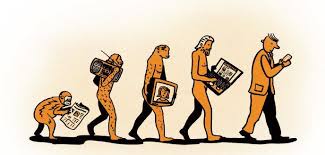
As the generations have evolved over the years, technology has made it easier for people to access the media in many different ways, such as television, newspapers, and the Internet. We do not realize how much our lives revolve around the media and the information that each one of them provides. Generations are interested in different types of media depending on their age group. As the involvement of media and technology heightens, our next generation is suffering from too much alone time and not enough time interacting with people anymore.
Over the past few generations media has shifted from newspapers to the television. From the television news media became more mobile on the Internet with breaking news at our fingertips. I sit back in my chair and remember when I was a little girl with curly blond hair sitting in front of the television watching my morning Smurf cartoons and commercials. I had to get up out of my seat, walk over to the television, and actually turn the switch clockwise to change the channel. As we all know there are remote controls now, and we can just sit on the couch and push buttons to turn the channel. Television has gone from black and white to color with remote controls so you do not have to move.
With the expansion of technology, Media is much easier to access with the expansion of technology. You can access the media even when you are not home. With the inventions of laptops, cell phones, newspapers and iPods, you can ascertain anything you want to know at any time of the day. We as a society are spending too much time researching all the different types of media access. Our teens are acquiring too much information. They are becoming more obese because they would rather be on their phones, laptops, or iPods these days than outside getting some good, healthy exercise. Children tend to mimic what they see. We as a group need to express to our children how all media is not always robust, and not everything they read or hear is true.
As our teens grow into adults, reality television, magazines, and You- Tube are influencing our children as the world perceives them. Magazines are mostly false as soon as they hit the shelves. As we all have learned in our lives, magazines like to air brush their talent to make them more appealing and less real. As a whole unit we need to come together and show our teens that there is more to life than just gadgets.
What is Media convergence?
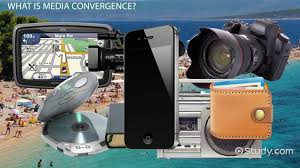
Media convergence is the joining, or ”converging,” of distinct technologies into one. It takes completely separate ideas and smashes them together, so that we’re left with one big idea. Take, for example, the smartphone from the lesson’s opening. The smartphone is the convergence of computing, communication, and content, frequently referred to in convergence theory as the three Cs. Now, one tool gives us the opportunity to communicate while functioning as a computer on which we view and share content, whereas before we would have needed multiple devices to accomplish each task individually.But media convergence isn’t only an end result like a smartphone, but also a process in how we create, consume, and distribute media. Think for a minute about how you found out about the latest big event in the news. Were you watching television? Reading a newspaper? Probably not. Most likely you were informed thanks to convergence, perhaps reading it on a social media feed on your smartphone as you commuted to work.Media convergence has even changed the way we receive data. Instead of getting a news report from TV, we’re getting that same report from a television station by way of the internet and social media, in particular. For people who work in media, convergence has changed the way they do their jobs. Instead of reporters simply writing a story to appear in tomorrow’s newspaper, they’re filming short video clips and tweeting about it, too—a smash-up of different digital technologies.Communication and technology are just two of the areas where convergence has been impactful. Media scholar Henry Jenkins theorized that there are actually five categories of convergence that we see today.
for example, magazines, radio programs, TV shows, and movies, now are available on the Internet through laptops, iPads, and smartphones.
Why is Media important?
Media is important because it gets your message across to a wider audience . Also it can help you target your message to the people you want to hear it. Moreover it provides free publicity and exposure for not only your news, announcement, event or request – but for your group or organisation as well. Furthermore,it can help establish your group as “legitimate”, and its activities as important or notable. It increases your profile among decision makers and VIPs.Lastly, it can sway opinions.
This is an example post, originally published as part of Blogging University. Enroll in one of our ten programs, and start your blog right.
You’re going to publish a post today. Don’t worry about how your blog looks. Don’t worry if you haven’t given it a name yet, or you’re feeling overwhelmed. Just click the “New Post” button, and tell us why you’re here.
Why do this?
The post can be short or long, a personal intro to your life or a bloggy mission statement, a manifesto for the future or a simple outline of your the types of things you hope to publish.
To help you get started, here are a few questions:
You’re not locked into any of this; one of the wonderful things about blogs is how they constantly evolve as we learn, grow, and interact with one another — but it’s good to know where and why you started, and articulating your goals may just give you a few other post ideas.
Can’t think how to get started? Just write the first thing that pops into your head. Anne Lamott, author of a book on writing we love, says that you need to give yourself permission to write a “crappy first draft”. Anne makes a great point — just start writing, and worry about editing it later.
When you’re ready to publish, give your post three to five tags that describe your blog’s focus — writing, photography, fiction, parenting, food, cars, movies, sports, whatever. These tags will help others who care about your topics find you in the Reader. Make sure one of the tags is “zerotohero,” so other new bloggers can find you, too.

 LANI'S blog